Wildlife Removal in the Pocono Mountains: Raccoons, Bats, and Squirrels in Mountain Homes
Raccoons, bats, and squirrels regularly invade attics and crawl spaces in Pocono Mountain homes. Here's how to identify entry points, understand the risks, and get wildlife removed humanely.
Wildlife Removal in the Pocono Mountains
The Pocono Mountains are wildlife country. Black bears, white-tailed deer, wild turkeys, and dozens of other species share this landscape with the hundreds of thousands of people who live and vacation here. For most wildlife, the coexistence is peaceful. For raccoons, bats, and squirrels — species highly adapted to exploiting human structures — the relationship becomes a problem when they move from the forest into your attic, crawl space, or walls.
Poconos Pest Control receives wildlife intrusion calls throughout Monroe, Pike, Wayne, and Carbon Counties every month of the year. The specific species changes with the season, but the core issue remains consistent: wildlife species have found that the built environment offers better shelter, warmth, and in some cases food than the surrounding forest. Once established, they are not inclined to leave voluntarily.
Raccoons: The Most Destructive Attic Invader
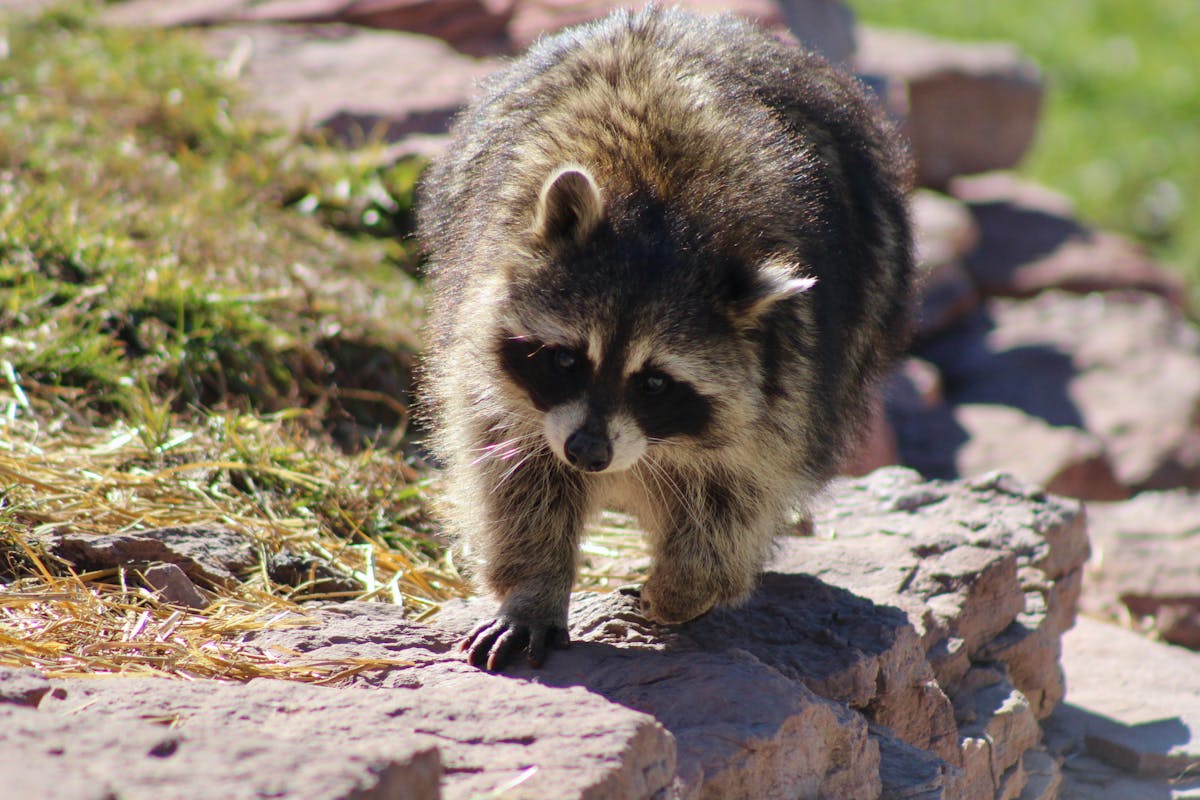
Raccoons are opportunistic, intelligent, and strong. A female raccoon seeking a safe den site in late winter or early spring — a period when they are preparing to give birth — will exploit almost any structural weakness to access a warm attic space. Rotted fascia boards, gaps at roof junctions, deteriorated ridge cap shingles, and uncapped chimney flues are all raccoon entry points we find routinely during inspections in Hawley and throughout Wayne County.
The damage raccoons cause once established is significant. They tear and compress attic insulation to create nesting platforms, contaminate insulation with urine and feces, damage ductwork and wiring, and in some cases tear through drywall. A raccoon family that establishes itself in late March and is not discovered until June has had three months to inflict damage that can cost thousands to remediate.
Raccoon roundworm (Baylisascaris procyonis) — present in raccoon feces — is a serious health concern. The microscopic eggs in raccoon latrines can persist in soil and contaminated materials for years and can cause severe neurological illness in humans and pets. Any attic or crawl space contaminated by raccoons requires professional cleanup following specific protocols, not just the removal of the animals.
Bats: A Protected Species That Requires Careful Management
All bat species in Pennsylvania are protected under state and federal wildlife laws. This means they cannot be killed, trapped, or harassed, and exclusion cannot be performed during the maternity season (June 1 through August 15) when flightless pups may be present.
Despite their protected status, bat colonies in attics are not a minor nuisance. A colony of little brown bats (Myotis lucifugus) — the most common bat in Pocono Mountain structures — deposits guano continuously in the roost area. Over time, guano accumulation damages structural materials, creates a Histoplasma spore risk (a fungal lung infection), and produces persistent odor.
Bats enter structures through gaps as small as 3/8 of an inch — where two surfaces of roofing or siding don't quite meet, at the junction of dormers with main roof surfaces, and through gaps around chimney flashing. Evening observation in August is the most reliable way to identify bat entry points: watch the roofline at dusk and note every location where bats exit.
Proper bat exclusion involves installing one-way devices over all identified entry points, allowing bats to exit but not re-enter, followed by permanent sealing once the colony has vacated. This process must be performed by experienced professionals who understand bat biology and can identify all potential entry points across the entire roofline.
Squirrels: Persistent and Surprisingly Damaging
Gray squirrels and flying squirrels both commonly establish themselves in Pocono Mountain attic spaces. Gray squirrels are active during the day and tend to establish themselves in fall when they are seeking winter shelter. Flying squirrels are nocturnal and are often mistaken for mice based on the scratching sounds they produce in walls and ceilings at night.
Squirrels gnaw continuously — on structural wood, on wiring insulation, and on HVAC components. Squirrel-damaged wiring is a documented fire risk. Beyond structural damage, squirrels bring nesting materials from outdoors that can harbor mites, ticks, and fleas into the living space.
Entry points are typically at the roofline: gaps at gable vents, deteriorated or missing soffit sections, gaps where the roof deck overhangs the wall framing, and gaps around roof penetrations. Squirrels chew actively to enlarge any gap they find, which means a small gap discovered in fall can become a significant opening by spring.
The Exclusion and Removal Process
For raccoons and squirrels, our process involves live-trapping where necessary, installation of one-way exclusion devices over primary entry points, and then permanent sealing once the animals are confirmed out of the structure. Attic remediation — removal of contaminated insulation and treatment of contaminated surfaces — follows as needed.
For bats, exclusion is performed outside the maternity season with professional exclusion devices and full roofline sealing.
For all wildlife, the permanent solution is physical exclusion of every entry point, not just the ones currently in use. Wildlife that loses access to one entry point will attempt to exploit adjacent weaknesses.
Call (570) 630-8857 for a free wildlife inspection of your Pocono Mountain home. We are experienced in humane wildlife management across Monroe, Pike, Wayne, and Carbon Counties and understand the specific species and structural vulnerabilities common to mountain homes and vacation properties.