Carpenter Ant Season in the Pocono Mountains: Protecting Log Homes and Wooded Structures
Every spring, carpenter ants emerge from their winter harborage and begin excavating galleries in Monroe and Pike County homes. Here's what Pocono homeowners need to know to stop them before structural damage occurs.
Carpenter Ant Season in the Pocono Mountains
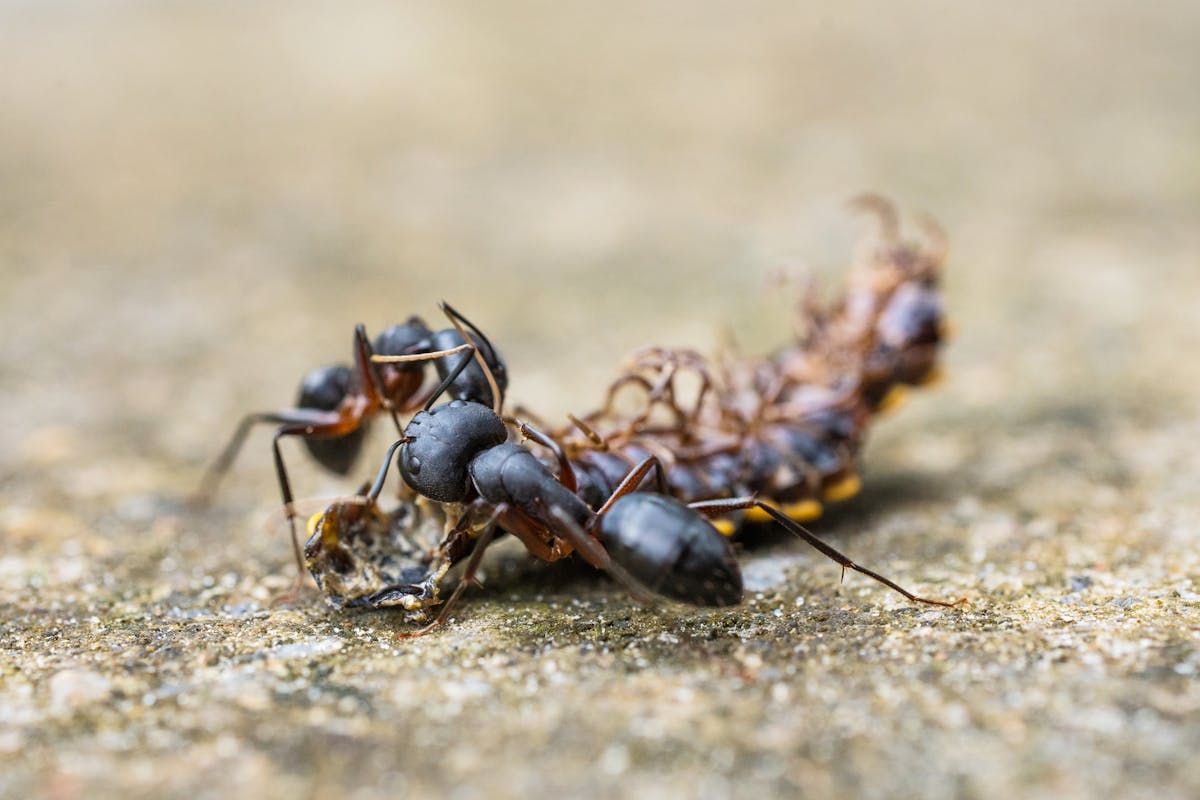
Every spring, as the snow melts off the ridges above Stroudsburg and the first warm days push through Monroe County, Poconos Pest Control begins receiving a steady stream of calls with the same complaint: large, black ants marching across kitchen counters, crawling along windowsills, or dropping from ceiling boards overhead. Carpenter ants are announcing the season — and in the Pocono Mountains, that announcement carries real structural weight.
Unlike most nuisance ants, carpenter ants don't just invade looking for crumbs. They excavate wood to build their colonies. In a region defined by log cabins, timber-frame vacation homes, and wooded residential properties, this makes them one of the most financially dangerous pests our team treats year-round.
Why the Poconos Are Prime Carpenter Ant Habitat
Carpenter ants (Camponotus pennsylvanicus) are native to the forests of the eastern United States, and the Pocono Mountains represent ideal habitat. Dense second-growth hardwoods, abundant fallen timber, and high annual rainfall create perfect nesting conditions for parent colonies in outdoor wood. When those outdoor colonies mature, satellite colonies establish themselves inside nearby structures — and your log cabin becomes the target.
Several Pocono-specific factors make the problem worse than in suburban settings:
Log and timber construction. A significant percentage of Pocono Mountain homes and vacation cabins are built with log or heavy timber construction — the aesthetic backbone of the mountain region. These structures have more wood surface area, more natural checking and grain separation, and more potential entry points than conventional stud-frame construction. Carpenter ants are drawn to exactly these characteristics.
Moisture from the landscape. Monroe and Pike Counties receive over 50 inches of rain annually, and the landscape drains slowly across the forested plateau. Moisture accumulates in crawl spaces, around foundation sill plates, and within wall assemblies — softening wood and making it far more attractive to excavating carpenter ants. A moisture-damaged joist is infinitely more appealing to a carpenter ant than a dry, sound one.
Seasonal vacancy. Thousands of Pocono Mountain properties are used only on weekends or seasonally. Carpenter ant colonies growing in an unoccupied home face no human disruption, no pest control intervention, and no monitoring. By the time an owner arrives to open the cabin for summer, a colony started the previous fall may have grown to tens of thousands of workers.
Forest edge proximity. Most Pocono Mountain residential lots border or contain woodland. The mature parent colony in a rotting oak stump 50 feet from your foundation is the source of the satellite colony in your wall void. Eliminating the ants inside the home without addressing the outdoor population creates a cycle of reinfestation.
Identifying Active Carpenter Ant Problems
The most common signs our team finds during inspections in Brodheadsville, Pocono Pines, and Tobyhanna:
Frass piles. Carpenter ants don't eat wood — they excavate it and eject the debris. This "frass" looks like coarse sawdust mixed with insect body parts and appears in small piles below infested wood. Finding frass inside a wall void, in a basement corner, or along a windowsill is one of the clearest indicators of an active colony.
Worker ants after dark. Carpenter ants are primarily nocturnal foragers. If you turn on a kitchen light at 2 AM and see workers moving along the baseboard or countertop, you have an active satellite colony inside the structure. Daytime activity in large numbers indicates a population that has outgrown its space.
Hollow-sounding wood. Probe suspected areas with a screwdriver handle. Wood that sounds papery or hollow when tapped may contain galleries. Do this on floor joists, window frames, and door frames — the areas where moisture tends to accumulate and wood decay begins.
Sudden swarmers. Winged reproductive carpenter ants (alates) emerging inside the home in spring indicate an established colony that has reached reproductive maturity. This means the colony has been present for at least three years.
What Professional Treatment Actually Involves
Surface sprays and over-the-counter ant baits provide temporary relief at best. Effective carpenter ant control requires locating and treating the satellite colony inside the structure, identifying and treating foraging trails, and addressing the outdoor parent colony or the conditions that support it.
Our licensed technicians use a combination of void injection with residual dust products, direct colony treatment where accessible, and exterior perimeter barriers to interrupt foraging routes. We also identify moisture sources and wood-decay conditions during every carpenter ant inspection — because treating the ants without addressing the underlying cause means the problem returns.
Prevention Steps for Pocono Homeowners
Cut back tree branches that overhang or contact the roofline — carpenter ants use these as highways. Keep firewood stored at least 20 feet from the structure and elevated off the ground. Seal gaps around utility penetrations, window frames, and where deck ledgers meet the house wall. Most importantly, address any moisture problems in crawl spaces and at the foundation — a dry home is a far less attractive home.
Carpenter ant season in the Pocono Mountains runs roughly March through October, with peak activity in April, May, and June. Annual spring inspections give homeowners in East Stroudsburg, Canadensis, and throughout Monroe and Pike Counties an opportunity to catch problems before colonies grow large enough to cause serious structural damage.
Call (570) 630-8857 for a free inspection. Our team serves all four Pocono Mountain counties — Monroe, Pike, Wayne, and Carbon — and understands the specific pest pressures facing mountain homes, log cabins, and seasonal vacation properties.