Termite Prevention for Pocono Cabins: Spring Swarm Season and What PA Homeowners Must Know
Subterranean termites swarm across Pennsylvania from March through June, and Pocono Mountain cabins face elevated risk due to moisture, wood-frame construction, and seasonal vacancies. Learn how to protect your property.
Termite Prevention for Pocono Cabins
The moment you find winged termites inside your Pocono cabin, the instinct is to assume the worst has already happened. In many cases, that instinct is correct — not because the swarmers themselves are the problem, but because their presence indicates an established colony that has been feeding on your structure, often for years without detection.
Subterranean termite swarm season in Pennsylvania runs from mid-March through early June, peaking when soil temperatures consistently exceed 50°F. Across Monroe, Pike, Wayne, and Carbon Counties, our team at Poconos Pest Control sees this play out every spring: cabin owners returning for the season discover winged insects near windowsills or sliding glass doors, and what began as a simple opening weekend becomes an emergency pest inspection.
The Pocono Cabin Risk Profile
Not all structures face equal termite pressure. Pocono Mountain cabins accumulate several risk factors that compound one another:
Seasonal vacancy. A cabin occupied only on summer weekends or during hunting season goes uninspected for long stretches. Eastern subterranean termites (Reticulitermes flavipes) are patient feeders — they work slowly along wood grain, creating hollow galleries invisible from the outside. A colony feeding through a slab-on-grade foundation for three to five years can cause structural damage worth tens of thousands before an owner notices.
High ambient moisture. The Pocono plateau receives more than 50 inches of precipitation annually, and many cabin lots drain slowly across clay soils. High soil moisture is the primary driver of subterranean termite activity — they require it to survive. Properties in Albrightsville, Pocono Lake, and Canadensis sitting in low terrain or with drainage problems face chronic high moisture conditions that sustain large termite populations.
Wood-to-soil contact. Older cabin construction frequently features porch posts, deck stairs, and siding that contact or approach grade-level soil directly. This is a direct termite highway. A wood post embedded in the ground or resting on a concrete pad that has settled can allow termite workers to reach the structure without ever building a visible mud tube.
Adjacent forest. Forests contain enormous biomasses of cellulose — fallen trees, stumps, and buried wood — that host large, mature termite colonies. When that food supply is depleted or when the colony grows large enough to need new foraging territory, your cabin becomes the next target.
Recognizing Termite Activity Before the Damage Becomes Obvious
Swarmers (alates). Winged termites emerging in spring are reproductives leaving an established colony to start new ones. Finding swarmers inside means there is a colony somewhere in or very near your structure. Finding discarded wings — equal-length pairs scattered near windowsills or on floors — confirms a recent swarm.
Mud tubes. Eastern subterranean termites build pencil-width mud tubes along foundation walls, crawl space piers, and plumbing penetrations to travel between soil and wood. These tubes are the clearest visible evidence of active infestation. Check foundation walls in crawl spaces, exterior foundation perimeters, and around utility entries.
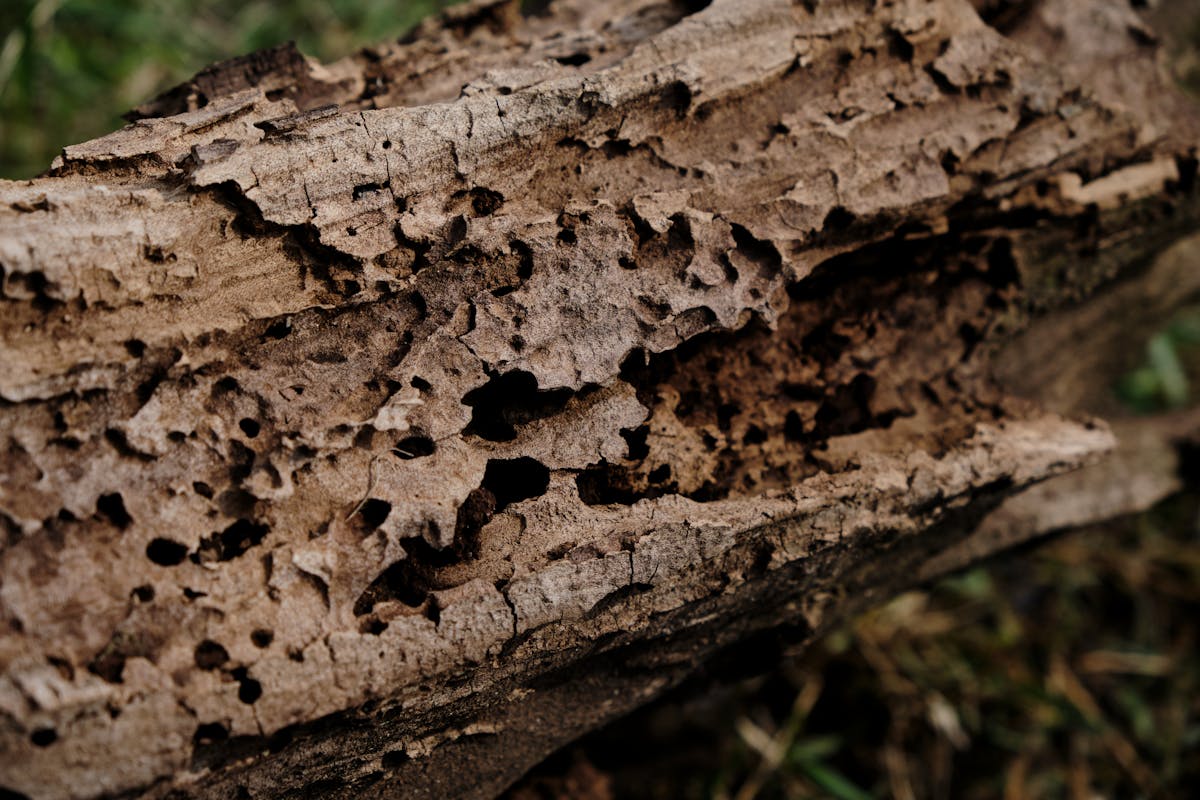
Softened or hollow wood. Probe floor joists, sill plates, and door frames with a screwdriver. Wood that compresses easily, sounds hollow when tapped, or has a papery surface veneer over a hollow interior has been fed upon. This is most common in crawl space framing where termites can feed undetected for years.
Paint bubbling over wood surfaces. Termite feeding and the moisture they carry into wood can cause paint to bubble, blister, or separate from wood surfaces — especially on lower exterior siding courses and interior baseboards near the foundation.
Treatment Options for Active Infestations
Non-repellent termiticide (Termidor). Termidor applied as a soil barrier around and beneath the foundation creates a zone termite workers cannot detect or avoid. Workers walk through the treated zone, pick up the active ingredient, and transfer it through feeding and grooming to nestmates — including the queen. Colony elimination typically occurs within 90 days of a complete barrier treatment.
In-ground baiting systems. Stations installed in the soil around the perimeter intercept foraging workers, who carry bait back to the colony. Slower than liquid barrier treatment but appropriate for properties near waterways where buffer zones limit soil injection access. Lake-adjacent properties in Hawley and Dingmans Ferry are common candidates.
Foam injection. For termites accessing the structure through identified pathways inside finished walls or under slabs, termiticide foam can be injected into voids and beneath slab sections to reach inaccessible areas.
Prevention: The Most Cost-Effective Strategy
Annual termite inspections are the foundation of prevention. A licensed exterminator can identify early-stage activity — small mud tubes in the crawl space, softened sill plates — before feeding progresses to the point where structural repairs are needed. For a seasonal cabin, schedule the inspection in spring when termites are most active and visible.
Beyond inspections: eliminate wood-to-soil contact wherever possible, maintain functional gutters and positive foundation drainage, keep firewood and wood debris away from the structure, and consider an in-ground baiting system as a permanent monitoring and interception tool.
Call (570) 630-8857 for a free termite inspection at your Pocono cabin or vacation home. Our team covers Monroe, Pike, Wayne, and Carbon Counties with same-day availability during spring swarm season. Don't wait for visible damage — schedule your inspection before the season peaks.