Wasp and Hornet Removal in the Pocono Mountains: Identifying and Eliminating Nest Hazards
Bald-faced hornets and yellow jackets build large, aggressive colonies in Pocono Mountain wooded properties every summer. Here's how to identify the species, assess the risk, and get nests removed.
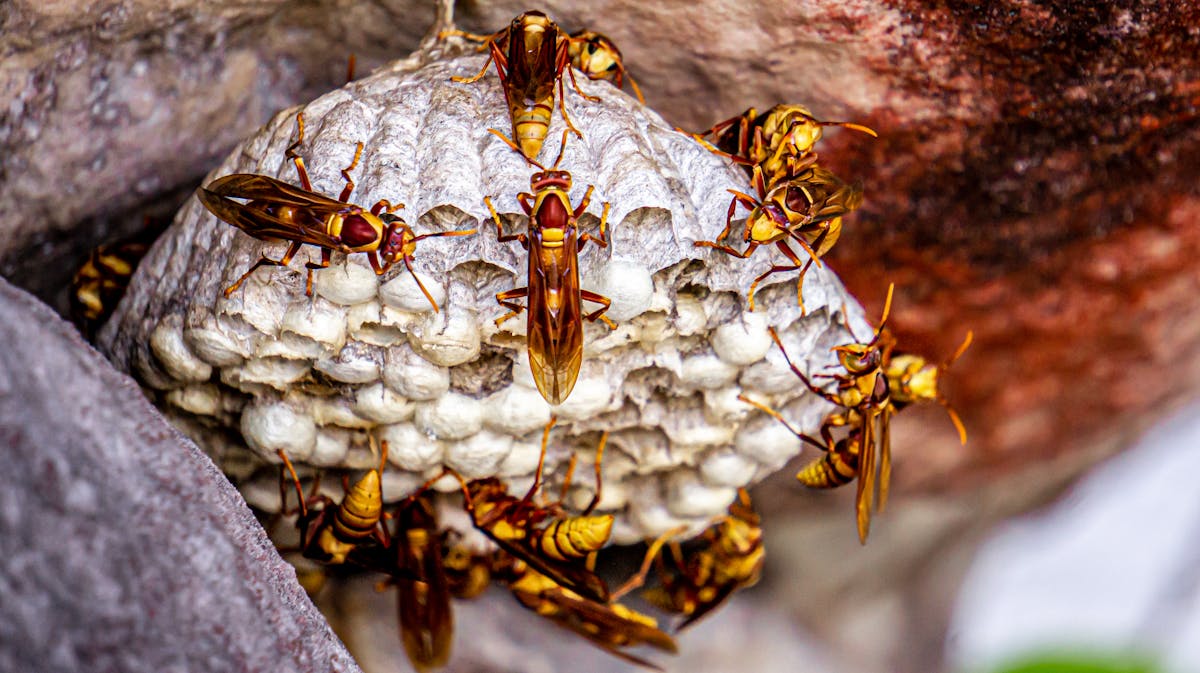
Wasp and Hornet Removal in the Pocono Mountains
Late summer in the Pocono Mountains is the peak season for stinging insect calls, and with good reason. By August, wasp and hornet colonies have been growing since early spring and have reached their maximum size — colonies containing hundreds to over a thousand workers, with every individual prepared to defend the nest aggressively. A property that had no stinging insect issues in June can have a serious hazard by mid-August.
The wooded, forested character of the Pocono Mountain landscape — Monroe County's dense second-growth hardwoods, Pike County's forested community lots, Wayne County's mix of farmland and forest — provides ideal nesting habitat for bald-faced hornets, European hornets, and multiple yellow jacket species. Our team at Poconos Pest Control responds to stinging insect calls throughout the four-county region from June through October, and we see the full spectrum of nest locations and colony sizes.
Species Found in Pocono Mountain Properties
Bald-Faced Hornet (Dolichovespula maculata). The large, gray, papery aerial nests hanging from tree limbs, eave overhangs, and utility structures are bald-faced hornet nests. These are the most visually dramatic stinging insect nests in the region — a mature nest by late summer can be basketball-sized or larger. Bald-faced hornets are black with white facial and thorax markings, about 3/4 inch long.
The critical behavioral point: bald-faced hornets are extremely aggressive in defending their nest and can sting multiple times. The defense radius can extend 10 to 15 feet from the nest in some cases, and they will pursue perceived threats. Do not attempt to remove or knock down an active bald-faced hornet nest. This is the stinging insect call where we most firmly recommend professional treatment.
Yellow Jacket (Vespula and Dolichovespula species). Yellow jackets are the most common stinging insect complaint across the Pocono region. They nest in two primary environments: underground in abandoned rodent burrows and under stumps, and in wall voids, attic spaces, and other structural cavities. Ground-nesting yellow jackets are a particular hazard because their nest entry is flush with the ground — easy to accidentally step on or disturb with a lawn mower.
By August and September, yellow jacket colonies peak in size and aggressiveness, and they begin scavenging human food sources more actively. Any outdoor meal or garbage can becomes a yellow jacket target late in the season.
European Hornet (Vespa crabro). The only true hornet native to North America, European hornets are large — up to 1.5 inches — and brown with yellow stripes. They nest in hollow trees, wall voids, and attic spaces. Unlike most wasps, European hornets are active at night and are attracted to lights, which generates alarm calls from homeowners in rural Wayne County and Pike County.
Paper Wasps (Polistes species). Paper wasps build smaller, open umbrella-shaped nests — the honeycomb-looking structures under eaves, in door frames, and in outbuilding rafters. They are less aggressive than yellow jackets and hornets if the nest is not directly threatened, but they will sting when nests are disturbed. Paper wasp nests in high-traffic areas — around front door frames, in gazebo roofing, or under deck furniture overhangs — should be removed before they become a sting incident.
Assessing the Risk Level
Not all stinging insect nests require immediate professional treatment. A small paper wasp nest under an infrequently used outbuilding eave poses minimal risk. A bald-faced hornet nest 40 feet up in a tree away from foot traffic can often be left through the season — colonies die out with the first hard frost and do not reuse nests.
However, professional treatment is warranted when:
- Any active nest is within 15 feet of a regularly used entry, play area, or outdoor gathering space
- A nest is inside a structural void (wall, attic, or crawl space)
- Any household member has a known venom allergy
- Ground-nesting yellow jackets are in a lawn or garden area
- Colony size or placement creates a sting hazard for guests at a short-term rental
For Airbnb and VRBO hosts in the Poconos, a stinging insect nest anywhere near the guest entry or outdoor space is a liability that warrants same-day response. A guest stung on arrival is a negative review waiting to happen.
Professional Treatment Process
Our technicians treat aerial nests at dusk or dawn — when forager populations have returned and wasp/hornet activity is at its lowest. Targeted aerosol insecticide is applied directly into the nest opening, which rapidly incapacitates workers before they can mount a coordinated defense.
Ground-nesting yellow jacket colonies are treated with insecticidal dust injected into the nest opening at dusk. The dust is distributed throughout the colony by returning workers and kills the colony within 24 to 48 hours.
Structural nests in wall voids require injection of insecticidal dust into the cavity through a small drilled access point, followed by sealing the entry point once the colony is eliminated. We verify colony elimination before sealing to prevent trapped and dying wasps from chewing through interior drywall.
Call (570) 630-8857 for a free inspection and same-day stinging insect service across Monroe, Pike, Wayne, and Carbon Counties. Don't let a nest become a sting emergency — let our licensed team remove it effectively.